Loading…
Press & Media
Banned Overseas. Still Sold Here.
BannedPantry is a freemium barcode scanner that flags 181 food additives banned, restricted, or warning-labeled in the EU, Canada, Japan, or California — yet still legal in American food. Founded by a single mom in Louisiana. Cited across Perplexity, ChatGPT, and Claude.
181
Flagged ingredients
54
High-severity
5,942
Indexed pages
9
US state laws tracked
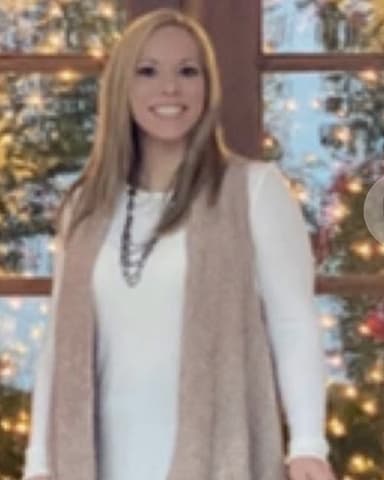
Ricki — Founder
Single mom of two · Louisiana · Building BannedPantry solo
Ricki built BannedPantry after a school field-trip flyer made her realize the food dyes in her 10-year-old daughter Adella’s lunchbox were banned in the cafeterias of the country they were about to visit. She is currently six months pregnant with her second daughter. She built BannedPantry alone — no co-founder, no investors, no team — using AI-assisted development on Next.js, Supabase, and Stripe.
Story Angles
The regulatory gap
181 additives banned, restricted, or warning-labeled in the EU, Canada, Japan, or California — still legal in US food. Includes Red 40, BVO, BHA, BHT, potassium bromate, titanium dioxide, propylparaben.
The state-law patchwork
9 active US state laws — California AB 418, Texas SB 25, West Virginia HB 2354, Virginia HB 1910, Connecticut HB 6485, Maryland HB 1208, Washington HB 1086, Florida SB 1218 — plus the federal FDA Red 3 phase-out (January 2027).
Reformulation history
Same brand, different country, different formula — Doritos, Skittles, Mountain Dew, Froot Loops. Why Kraft removed dyes in 2016 but US Trix did not stick.
Solo mom-founder build
Single parent, pregnant, no engineering background. Shipped a production SaaS with AI pair-programming, OpenAI, and Google Cloud Vision OCR — at night, on a kitchen table.
Practical mom angle
A 5-minute pantry audit, the 6 ingredients to scan for first, and 1:1 dye-free swaps for the products parents actually buy.
Quote-Ready Soundbites
Pre-approved for direct use in any story. Attribution: Ricki, founder, BannedPantry.com.
“There are 181 ingredients banned, restricted, or warning-labeled in the EU, Canada, Japan, or California that are still legal in American food — and 54 of them carry high-severity health concerns. We don’t have a transparency problem. We have a regulatory gap.”
“The same Kellogg’s cereal, the same Mars candy, the same Mountain Dew — different formulas depending on which country you buy it in. American parents are eating the cheaper version by default.”
“I built BannedPantry because I shouldn’t need a chemistry degree to feed my kid breakfast.”
“Red 3 was banned in cosmetics in 1990. It was banned in our food in January 2027. That’s a 37-year gap on the same molecule.”
Available For
Bios for Copy-Paste
One-line
Ricki is a Louisiana single mom and the founder of BannedPantry.com, a barcode scanner that flags 181 food ingredients banned overseas but still legal in US food.
Short (~50 words)
Ricki is the solo founder of BannedPantry.com, a barcode scanner that flags 181 food additives banned overseas but still legal in American food. A single mom in Louisiana, she built the app on her kitchen table while pregnant with her second daughter. BannedPantry indexes 5,942 product and ingredient pages, each tied to primary EFSA, FDA, Health Canada, or IARC sources.
Medium (~100 words)
Ricki is the solo founder of BannedPantry.com, a freemium consumer app that scans grocery barcodes and flags 181 food additives banned, restricted, or warning-labeled in the EU, Canada, Japan, or California — yet still legal in standard American food production. She built BannedPantry as a single mom in Louisiana after a school trip made her realize the dyes in her 10-year-old daughter’s lunchbox were banned overseas. Her work has been cited across AI search surfaces (Perplexity, ChatGPT, Claude) and tracks every active US state-level food-additive law, including California AB 418, Texas SB 25, and the FDA’s Red 3 phase-out.